28/08/2010

09/08/2010

  • Another Wedding quilt

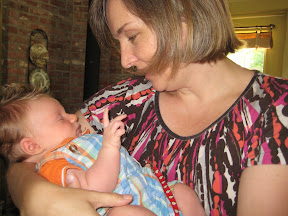
    Before I left for Cambodia I made a quilt for a sweet cousin "M" and her beloved... Now this quilt has a bit of sweet nostalgia, as the batik center piece was nearly 25 years old. In 1985 I went to Mussoori, India to help out my auntie and uncle in the last month of "her confinement" and the first month of baby "M"s journey. Here's a pict from that time... and a chai stall I think is lovely. Baby "M" is in the snugglie with her daddy.

     
    At that time a fabric-seller (fabric-wallah) stopped by their apartment and I bought a piece I though would make a lovely pillow. I had my Dad in mind as he loved peacock blue ink for fountain pens and it was the national bird of India. This is the Peacock Batik

    edit  (Peacock: As a symbol of immortality (even St. Augustine believed the peackock's flesh to have "antiseptic qualities" and that it didn't corrupt), the peacock became a symbol of Christ and the Resurrection. Its image embellished everything from the Catacombs to everyday objects, like lamps, especially in early Romanesque and Byzantine churches.)
    Below is a slide show of the whole quilt and a link of the quilt at it's new home.

13/07/2010

01/07/2010

  • Cousin Cory and Co.

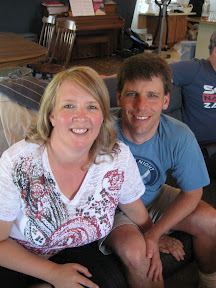
    What a sweet celebration... storytelling, good eating, laughter.

    The place: Cousin Cory's great new place with plenty of room for kids and critters!
    The menu: chicken fettuccine alfredo, coke, ice-cream-raspberry-gelatin "the recipe"
    The stories: the ongoing adventures of life in Cambodia and Kelowna
    The movie: Hepburn and O'Toole in "How to Steal a Million"
    The activity: Bead Jewelry heaven
    The animals: Jim, Pete and the lady lizard
    The treasure: dear-hearted family, hugs and snuggles and seashells from Hawaii...

    Life is so very beautiful when I get to spend time with these wonderful peeps...
    I am grateful for their love!

    Thank you, Cory for sharing your sweet family's warm welcome and hospitality with me.


    See slide show below

29/06/2010

  • "Pilgrimage" by Richard Rohr

    "Pilgrimage" by Richard Rohr

    (Recorded at the Shrine of Our Lady of Lourdes)

    We are always looking to the next moment to be more perfect. We're a people always rushing into the future because we're not experiencing wholeness in the present. Yet, this moment is as perfect as it can be. When we haven't grasped the present, we always live under the illusion—and it is an illusion—that the next moment is going to be better: when I get around this corner, when I see this church, when I get to Jerusalem, when I get to the hotel, whatever it might be. Everything we do is for the sake of something else, a means toward some nebulous end.

    That attitude is essentially wrong. As long as we think happiness is around the corner, we have not grasped happiness. Happiness is given in this moment. Everything is right here, right now—the total mystery of Christ; totally hidden and yet perfectly revealed.

    Though pilgrimages are good for the spirit, if you can't find Jesus in your hometown, you probably aren't going to find him in Jerusalem . If you haven't already entered into a relationship with Mary before, you probably won't find her at Lourdes . We go on pilgrimage so we can go back home and know that we never need to go on pilgrimage again. Pilgrimage has achieved its purpose when we can see God in our everyday and ordinary lives.

    from On Pilgrimage with Father Richard Rohr

  • Getting it down to the Essentials - Ron Rolheiser

    Getting it down to the Essentials - Ron Rolheiser

    2010-06-27

    Sometime after his 70th birthday, Morris West wrote an autobiography which he entitled, A View from the Ridge. By ridge, he meant the angle that 70 years of living had given him.

    And what he offers is an exceptionally mature perspective on life.

    When you get to be 75 years old, West says, your vocabulary should be pretty simple. You only need to have two words left: "Thank you!" Gratitude is the real mark of genuine maturity, of spiritual health. Don't ever be fooled about this.

    Moreover, for West himself, gratitude wasn't easy to come by. His life, as his autobiography makes clear, had its share of hurts and rejections; not least by the church which he loved. So his story also highlights that gratitude is predicated on forgiveness, on letting go of hurts, on not letting the past bitterly color the present. To be grateful is to be forgiving.

    And we all have hurts, deep hurts. Nobody comes to adulthood, let alone to old age, without being deeply hurt. Alice Miller, the renowned psychologist, puts it this way: All of us, from the time that we are infants in the cradle until we are self-possessed enough to write an autobiography like Morris West's, are not adequately loved, not adequately cared for, not adequately recognized, not adequately valued, and not adequately honored. Moreover all of us also suffer positively some rejection and abuse. None of us is spared life's unfairness. She calls this the drama of the gifted child, namely, the drama of being a unique, sensitive, intelligent, deep, and gifted person who in this life is never quite loved enough, recognized enough, respected enough, or honored enough, and who is sometimes positively rejected and abused. Small wonder that it is easier to be bitter than grateful, paranoid than hospitable, angry than gracious.

    What can we do about this, beyond first of all admitting that we do nurse a grudge against life?

    Miller suggests the most important task of mid-life and beyond is that of grieving. We need, she says, to cry until the foundations of our life are shaken. At a certain point in our lives the question is no longer: "Am I hurt?". Rather it's: "What is my hurt and how can I move beyond it?" It's like having been in a car accident and carrying some permanent scars and debilitations. The accident happened, the limp is there, nothing is going to reverse time, and so our only real choice is between bitterness and forgiveness, between anger and getting on with life, between spending the rest of our lives saying "if only!" or spending the rest of our lives trying to enjoy the air, despite of our limp.

    An important idea within the Jewish and Christian concept of the Sabbath is the notion that, while the celebration, rest, enjoyment, and prayer of the Sabbath is largely for its own sake, these are also in function of something practical, namely, forgiveness. We are meant to rest regularly, pray regularly, celebrate regularly, and enjoy life regularly both because this is what we will be doing in heaven and because, by doing these, we might find within us the heart we need to forgive.

    It's no accident that, often times, our vacations don't really do for us what they should: We get over-worked and tired and we look forward to a vacation, some time away to rest, to relax with friends, to drink wine and enjoy the sun. Then we take a vacation and do, in fact, very much enjoy it. Sadly though, within days or weeks after we return we find ourselves as tired as we were before the vacation. What happened? Why didn't our vacation work?

    Our vacation didn't work because we didn't forgive anybody. We didn't let go of any grudges. The most tired and stressed part of us didn't get to go on vacation, didn't get to let go and relax, and didn't find itself warmed by wine and friends. It stayed cold, anxious, stressed, over-worked. There's a tiredness that cannot be cured by a good sleep, a good vacation, or by the right time with the right friends with the right wine, and it's the deepest tiredness inside us. It's the tiredness that stings because of hurt, that's cold because it hasn't been loved, that's calloused because it has been cruelly cut, and that burns with resentment because of the neglect and rejection it has experienced. This is a bone, deep tiredness that isn't cured by a vacation, but only by forgiveness.

    There is only one ultimate imperative in life: Before we die, we need to forgive. We need to forgive those who hurt us, to forgive ourselves for not being any better than those who hurt us, to forgive life itself for some of the things that it dealt us, and, not least, to forgive God for the fact that life is unfair, so as not to die with a bitter and angry heart.

    Gratitude is the fruit of that struggle.

    - Ron Rolheiser

28/06/2010

  • "Pilgrims, Not Tourists" by Richard Rohr

    "Pilgrims, Not Tourists" by Richard Rohr

    (Recorded at Lourdes) We must pray for a deepening of faith. Pray for freedom from cynicism and judgments. On pilgrimage to a foreign land, you're going to see people who act and talk differently, and if you move into your sophistication, you will take offense. You will lose the childlike spirit that the gospel asks of us.

    A pilgrim must be a child who can approach everything with an attitude of wonder, awe and faith. Pray for wonder, awe, desire. Ask God to take away your sophistication and cynicism. Ask God to take away the restless, anxious heart of the tourist, which always needs to find the new, the more, the curious. Recognize yourself as a pilgrim, as one who has already been found by God.

    As we look upon a holy place like Lourdes and wonder about what we see, we can let it speak to us. It isn't our country, perhaps. It isn't our way of saying it. But it's a holy place. It has drawn thousands of holy people from throughout the world for a hundred years. Just listen and wait.

    from On Pilgrimage with Father Richard Rohr

19/06/2010

  • "The Need for Silence" by Richard Rohr

    "The Need for Silence" by Richard Rohr

    We don't know how to take joy in simple things anymore because, frankly, we are sated. You and I have had so much thrown at us! Unless we choose to deliberately under-stimulate ourselves, I don't think we can reasonably talk about spirituality. We don't really taste, suffer, enjoy, feel the images that come our way. Westerners have a mania for experience. Descartes said, I think, therefore I am. For us it is I experience, therefore I am. But I'm pretty much convinced experiences don't change people; realization does. I think of all the powerful experiences that I've had. But only when I taste my experiences enough so they become realizations, do I change. That takes time and space. Put time and space together and you have a new definition of silence. We've got to create some kind of space so our images can become realizations. Unless we choose silence, I don't think a lot of this is going to happen. I don't think were going to become willing people. We become, instead, willful people, trying to make the world fit our needs. Will triumphs instead of the Spirit. Silence alone is spacious enough to allow Spirit and to let go of will-fullness. Silence makes us willing instead of willful.

    from Letting Go: A Spirituality of Subtraction

    Having a tendency to codependence, it wasn't "I think therefore I am..." but "He is therefore i am..." yet the only one who can carry the weight of my love, my worship and adoration is the Creator... I try to carve out time to remember and listen, "God is, therefore I am..." I know God is a loaded-term but remembering the Source of all things Sacred has calmed my mind and heart. I've been given "peace that passes understanding" and have sourced my joy in the strength of the Divine as revealed in Jesus. In this place I understand myself as Beloved.

    A Listening:

    Dear One,

    Hope in my goodness.
    Have faith in my Word.
    From your hope and faith my Truth is revealed.
    Be encouraging and in turn be encouraged by the faithfulness of others.
    Provide a place of welcome and refuge for the weary.
    Provide a moment of Joy and delight for the young.
    Provide a place of kindness and thoughtfulness for the despairing.
    Begin within your own heart.
    Be kind with yourself, include joy and delight in your days.
    Find your place of "Place of Welcome" in my presence.
    From this place of refuge and rescue you will have much to share.
    Rest, rest, rest in my Care now and evermore.
    amen

18/06/2010

  • "Community: The Foundation of Authority" by Richard Rohr

    "Community: The Foundation of Authority" by Richard Rohr

    The good news that Jesus communicated to his brothers and sisters is the good news of a life-style, a life together. I believe the authority of the Church comes from a life shared and lived together. Out of that come our answers, our roles, functions. Out of that experience of the risen Jesus freeing us and giving us his victory come the teachings of the Church. Unfortunately we in the Church are trying to teach a morality apart from the experience of the risen Jesus freeing his people. Yet the most compelling moral responses come from the ambiguities of real life not from textbook answers that are prefabricated and so-called pure. That's why any renewal of the Church that is not a return to some type of community, loyal relationships, family, isn't renewal. We do not think ourselves into a new way of living; we live our way into a new way of thinking. Educators and prelates seem to have a hard time understanding that.

    from The Spiritual Family and the Natural Family